
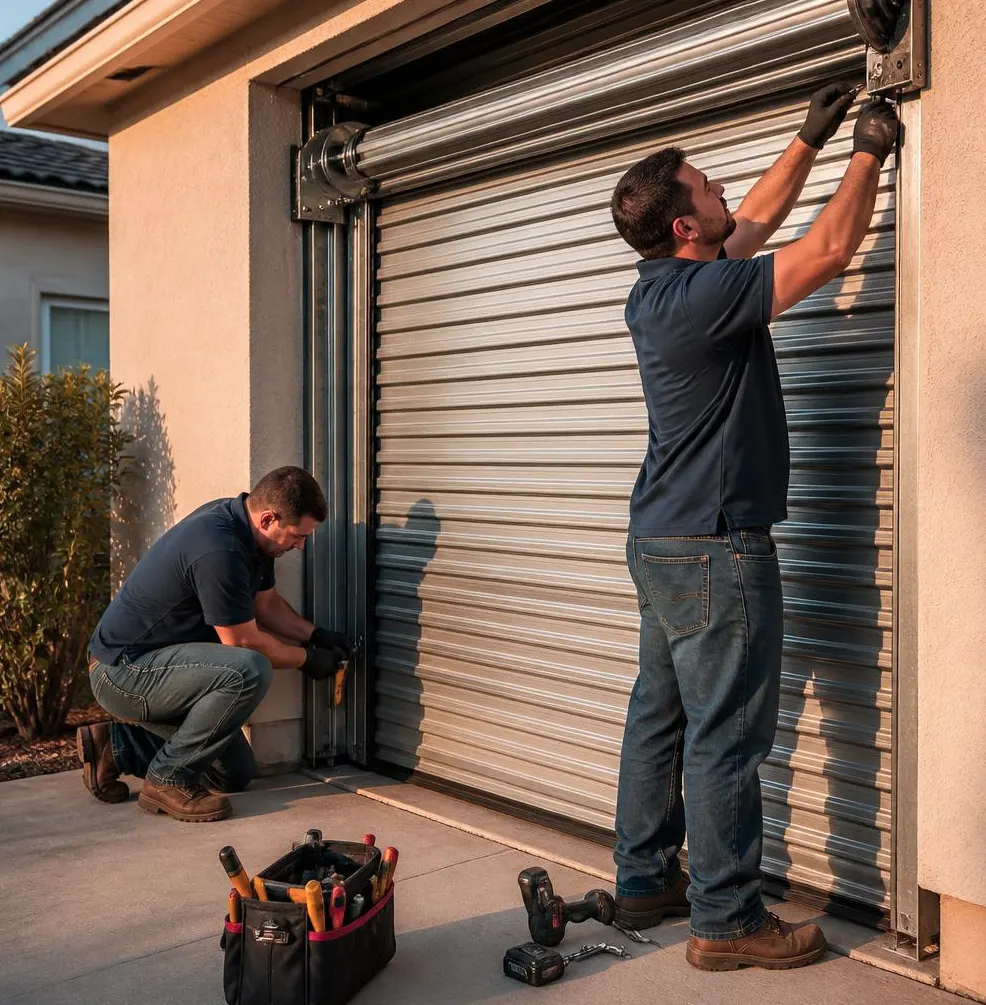
Every season you leave an uninsulated, original garage door on a room you're actually using costs you something: a higher heating bill, condensation dripping down the inside of the panels, and a seal that's slowly turning to crumbs in the freeze-thaw cycle. Put it off through another North Shore winter and you're not just arguing about aesthetics anymore — you're looking at rust streaks, a warped panel, or a door that won't seat flush against the frame when the cold really sets in.
What Actually Changes When You Finish a Garage
Turning a garage into a gym, home office, or workshop usually means insulating the walls and ceiling, maybe adding drywall, a window, a mini-split or baseboard heat, and sealing up drafts. All of that changes the humidity and temperature behavior of the room. The garage door, if it's original to an older North Shore house, was never designed to be part of a conditioned space. It was built to be a buffer between outside and a cold, unheated box.
The Door Doesn't Know the Room Behind It Changed
This is the part that causes the actual damage, and it's worth sending straight to whoever's on the other side of the argument:
- Condensation: warm, humid indoor air meets a cold steel door, and you get moisture beading on the inside panels — especially in humid summers and during winter heating season. That moisture runs down, pools at the bottom track, and accelerates rust.
- Insulation mismatch: if the walls are R-13 and the door is a single-layer, non-insulated steel panel from decades ago, the door becomes the weak point in the whole room. Heat escapes there first, and it's the first surface to frost or sweat.
- Seal failure: rubber weatherstripping that's already brittle from years of salt air and freeze-thaw cycling will crack faster once there's a bigger temperature difference between inside and outside pressing on it.
- Opener strain: if you upgrade to an insulated door later, it's heavier. An older opener sized for a lightweight original door can struggle, strain the drive system, or stop lifting evenly.
The Argument: Keep It Functional or Wall It Off
This is usually where the actual disagreement lives, so here's the honest trade-off on both sides.
Keep the door operational
- Preserves resale flexibility — a future buyer can convert the space back to a garage.
- Keeps a large, easy exit/entry point for moving equipment, furniture, or a lawnmower in and out.
- Requires an insulated door, intact weatherstripping, and working auto-reverse safety sensors since people (and kids, if it's a playroom or gym) will now be living in the space the door swings into.
Frame it in as a permanent wall
- Better long-term insulation and no moving parts to maintain.
- Usually means removing the track, spring system, and opener entirely — not a weekend project, and it often requires structural work on the header.
- Harder to reverse later if a future owner wants the garage back.
Neither answer is wrong. But doing nothing — leaving an old uninsulated door on a finished room — is the one option that actively causes damage over time.
Three Things Worth Fixing No Matter Who Wins
- Replace cracked or flattened weatherstripping before the first hard freeze. It's cheap insurance against the exact moisture problems described above.
- Confirm the auto-reverse and photo-eye sensors work if people, workout equipment, or tools are now stored or used near where the door travels. This matters more once the garage is an actual living space and not just parking.
- Have the spring and opener load checked if you've added or plan to add an insulated door — the added weight changes the math on both.
When to Call Glen Head Garage Door
If you're leaning toward keeping the door functional, we can walk you through insulated door installation sized correctly for the opener you already have, along with a full seal and weatherstripping check so the room doesn't fight the door all winter. If you're leaning toward walling it in, we can assess what's structurally involved in removing the track and spring system safely before anyone touches drywall. Either way, it's worth a second opinion before the argument gets settled with contractor money.
Call Glen Head Garage Door to talk through the conversion — serving Glen Head, Sea Cliff, Glenwood Landing, Old Brookville, Greenvale, Glen Cove, Roslyn, and Oyster Bay.